
The Harrison County Arrest Log Gap
Harrison County has no official multi-day arrest blotter. Not from the sheriff. Not from Clarksburg, Bridgeport, or Shinnston police. The state's Daily Incarcerations tool lists recent admissions. The live jail search shows who is in WVDCR custody right now, but neither one keeps a permanent Harrison-only archive. A real multi-day look at Harrison County arrests means combining several labeled sources instead of expecting one tidy log.
North Central Regional Jail in Greenwood handles booking for the region, which spans eight counties. That is why a Clarksburg arrest can land in a state facility outside Harrison County. It also means the picture stays incomplete. People cited and released, bonded out, or held elsewhere simply never show up on that roster.
Busy weekends do not produce a guaranteed Monday batch of Harrison County arrests. WVDCR posts no fixed reset time and no special holiday schedule.
Read Harrison County Multi-Day Records
Start with official custody and court records, then add context from news. That order keeps a jail admission, a police call, and a news story from blurring together.
- Check WVDCR Daily Incarcerations for recent admissions by county or NCRJ.
- Use the current jail search to see whether custody is still shown.
- Review the Harrison County MediaLog only for incident context during its 72-hour window.
- Search magistrate and circuit records for the filed case and disposition.
- Use dated local journalism or third-party archives as secondary leads, then verify every field.
For the freshest admission, the 24 Hour Arrests page fits better. The approach here suits older entries, delayed postings, and several days of Harrison County arrest activity.
Harrison Arrest Log Entry Fields
Every source carries different fields. A county MediaLog entry never becomes a booking record just because officers responded, and a news story citing an arrest is not a live custody line. Label each field by where it came from.
| Field | Source and meaning |
|---|---|
| Date and time | Call time, admission time, or article time depending on source |
| City or street | Incident location in MediaLog, not a detention location |
| Responder agency | Unit answering a call; not always the arresting agency |
| Name | Appears in custody, court, or selected reporting, not MediaLog |
| Booking date | WVDCR intake timing, which can follow the arrest |
| Charges | Charges as booked or filed, subject to change |
| Photo | May appear in OIS or editorial/secondary coverage, not MediaLog |
| Disposition | Comes from the court, not the blotter or booking feed |
Check dates before linking two Harrison County records. Similar names are not enough. An offender ID, case number, and arresting agency keep you from matching the wrong person.
Why MediaLog Is Not Arrest Data
The Harrison County Bureau of Emergency Services MediaLog tracks calls from the previous 72 hours. Each entry can list the date and time. Call type, street, city, responding agencies, and brief comments round out the record. That makes it useful for mapping. It shows where public-safety activity happened in Harrison County. It cannot tell you who was arrested. It also cannot say whether anyone reached NCRJ, what bond was set, or whether a booking photo exists.
A call may end with no enforcement action at all. The arrest behind it might stem from a warrant. The investigation driving it can stay invisible in the call label. A city response can also pull in the sheriff or state police. Treat MediaLog as the event layer. Then turn to WVDCR and court records for the person and the case.
Note: MediaLog rolls off after its window and is not a historical criminal-case archive.
Harrison Arrest News Patterns
Local journalism partly fills the gap left by an official Harrison County blotter. WV News and The Exponent Telegram run dated stories. Harrison County arrests, warrants, indictments, and court proceedings all get coverage. WDTV and WBOY pick up selected regional events. Connect-Bridgeport offers the deepest Bridgeport coverage, while the Shinnston News leans toward Shinnston and the county at large. Coverage choices are editorial. An arrest absent from the news means very little.
The Connect-Bridgeport site shows what city-focused editorial coverage looks like.

Stories often cite police or court paperwork and sometimes an NCRJ booking photo, but an outlet is not a roster. The Shinnston News site offers another local angle.
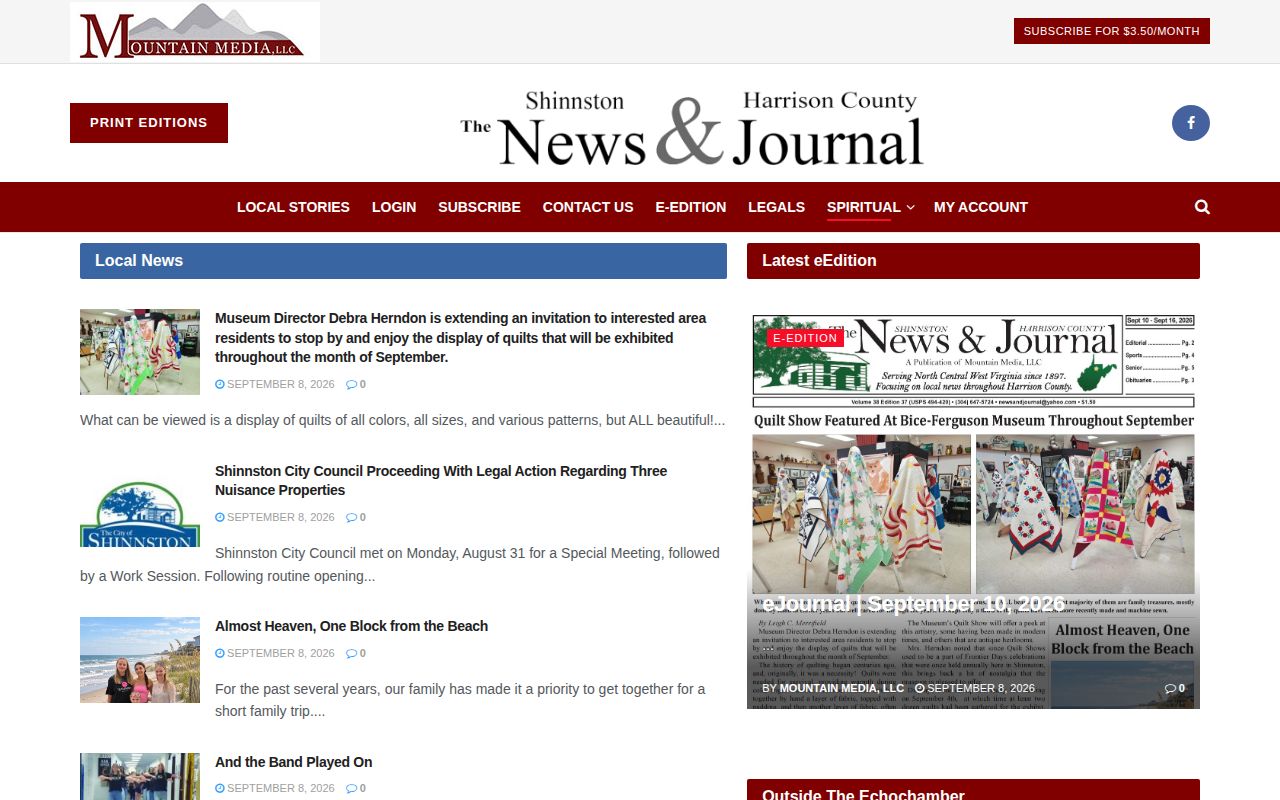
No current booking or mugshot blotter appears there. Treat its issue archive as journalism, not proof of custody.
Unofficial Harrison Arrest Archives
Several unofficial sites archive Harrison County booking data. Busted Newspaper posts dated pages under an "NCRJ Mugshots" label with deep repost history. RecentlyBooked carries a 30-day Harrison section it says refreshes several times daily. Arrests.org offers recent, yesterday, and date filters. None comes from WVDCR or the courts. Any of them can be stale, incomplete, or wrong on agency and facility.
The RecentlyBooked local section shows the secondary 30-day format.
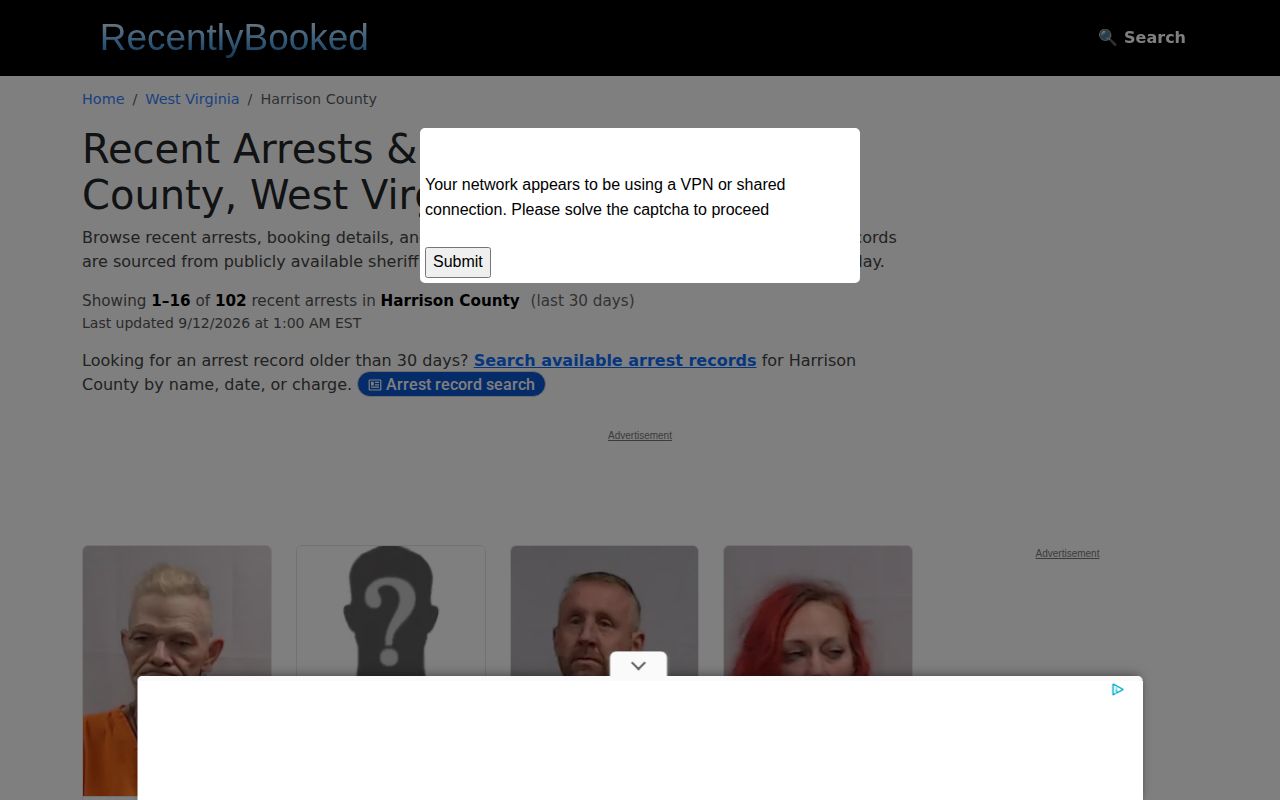
These listings may show names, booking times, charges, and photos. Yet the county-jail branding can hide the official NCRJ identity. Use them only to pin down a possible arrest date. Then verify custody with WVDCR and the outcome with the court. A reposted booking photo identifies an arrest event. It says nothing more.
Weekend Harrison Arrest Reports
Weekends and holidays scramble the paperwork trail. The arrest, magistrate review, transport, booking, photo, and publication steps happen separately. WVDCR promises no midnight reset and no Monday catch-up. Newsrooms publish on their own schedules too.
When a Friday-to-Sunday arrest stays invisible, widen the date range and check the live roster. Ask the agency for its incident report. Search the court for a complaint. One empty screen never proves an event did not happen, and one old weekend admission never proves current custody.
Check the court disposition to see whether the charge ended in dismissal, amendment, acquittal, plea, or conviction.
Older Harrison Arrest Archives
Older arrest material lives with the office that created it. The Harrison County sheriff keeps incident and process records from sheriff cases. City police departments hold their own arrest reports. WVDCR controls records tied to NCRJ and the Offender Information System. The courts keep dockets, orders, and case files. A narrow request works best. Name the person, the agency, and the date range. Add a report or case number, plus the exact record type you want.
The West Virginia sheriff retention schedule sets firm windows for county material. Commitment records last five years, and prisoner reports ten years or until audit. Activities and complaint calls drop off after one year, radio logs after two. Fingerprints stay while they remain valuable. Misdemeanor unserved warrants last three years. Felony warrants are permanent. None of those county-jail series sets a public retention period for NCRJ booking photos. Ask WVDCR which state schedule governs them.
An arrest record can outlive its online posting. Retention schedules can also destroy it, transfer it, seal it, or expunge it. West Virginia Archives and History helps identify historic county record series. Still, no source promises that every old mugshot survives.
Public Record Search
Sponsored Results
Harrison Arrest Log Source Check
Before you trust a multi-day entry, note its publication date, agency label, facility, and update time. Then compare it against WVDCR custody data and the court docket. That quick check separates a dated repost from a current official arrest record.